As an addendum to our previous post PLASTIC, THE GOOD, BAD, UGLY, we thought you might be interested in some further information.
Researchers from Yale University traveled to Ecuador's rainforest to look for fungi capable of eating polyurethane plastic, and they say they found more than one! Pestalotiopsis microspora is the fungus they showed to have the most ability to survive while consuming and degrading polyurethane in aerobic and anaerobic (oxygen-free) environments. This, obviously, was done in a lab, but the possibility of using this fungus in a landfill deserves more investigation. (Source: Biodegradation of Polyester Polyurethane by Endophytic Fungi, Applied Environmental Microbiology).
This paper also noted that more and more plastic is being produced every year and cites the 2006 production at 245 million tons. In fact, one industrial facility in China is expected to have the capacity to produce one million metric tons per year - that's just one facility!
Now if we can just keep the seagulls from eating the fungus------
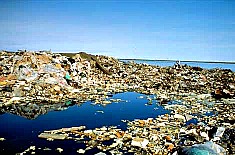
Plastic - how did we ever live without it? Everything seems to be made of it or contains it. Too bad it's such a hazard to our health and the health of our planet. Our landfills are full of it and every bit of plastic that has ever been created still exists (except for the little bit that has been incinerated, which releases toxic chemicals).
In the ocean, plastic waste is accumulating in vast areas where, among other things, fish are ingesting toxic bits at a rate that will soon make them unsafe to eat.
Some common plastics release harmful chemicals into our air, food and drinks. Maybe you can't see it or taste it, but if you're serving your dinner on plastic you're likely eating a little plastic for dinner.
Of course, there's good (kinda) plastic and bad plastic. If you don't know the code, how can you tell what probably isn't harmful and what is toxic? Never fear, Over 40?- So What! to the rescue. Following is a code list that will steer you into safer waters (not bottled - remember the landfill).
We hope this information will help you to make informed decisions when you purchase plastic materials. We are sure after reading the chart that we will never again buy eggs in anything but a cardboard container, and forget plastic wrap altogether.
We are indebted to Healthy Child Healthy World for some of the content of this post.